Silent Stroke: What an Incidental Brain Infarct on MRI Can Mean
A patient guide to silent brain infarcts, risk assessment, and urgent stroke symptoms
Reviewed and verified by the medical team at Zydus Hospitals.
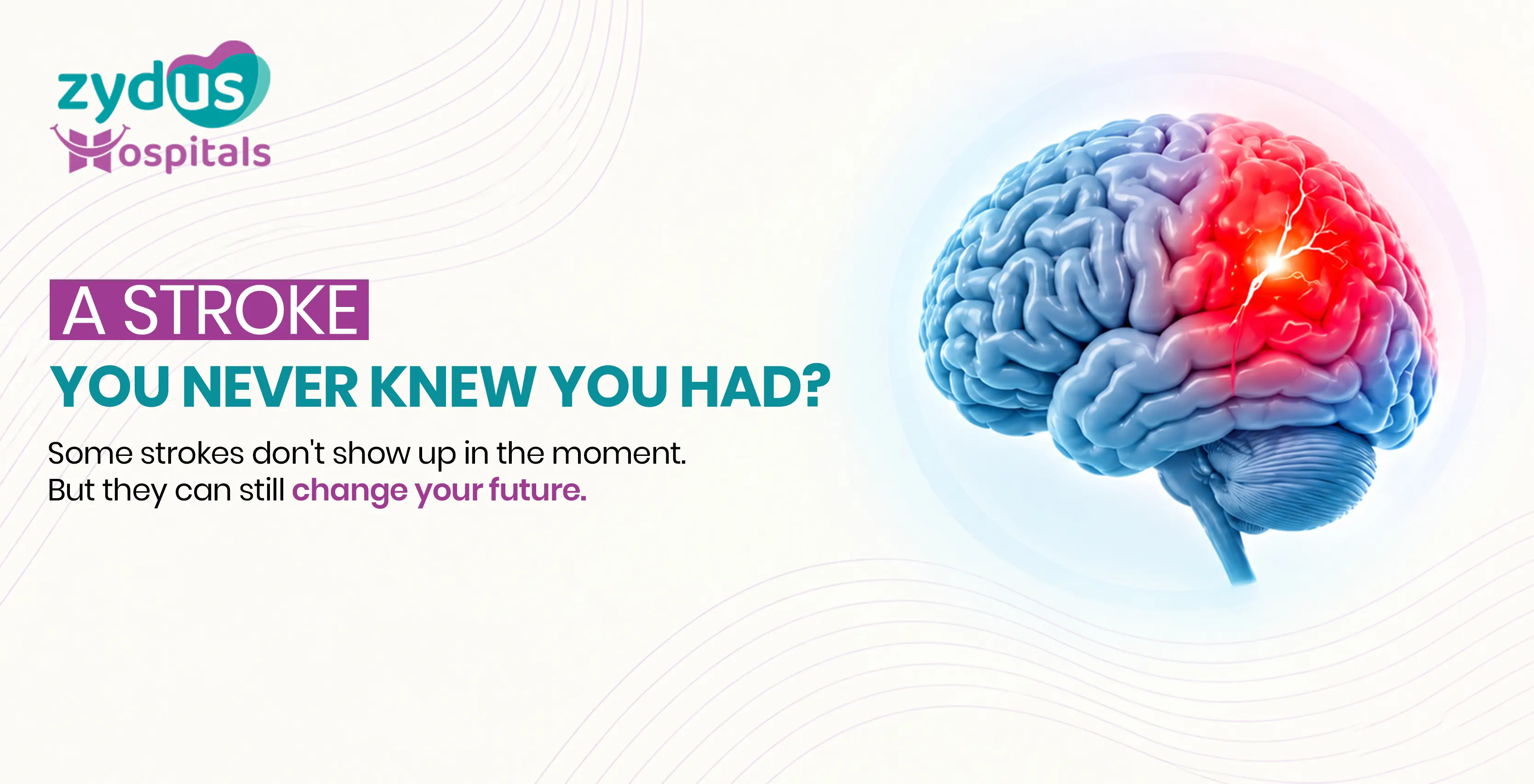
A brain scan performed for headaches, dizziness or another reason may unexpectedly show an old area described as an infarct. When imaging shows brain tissue injury from interrupted blood flow but the person had no recognised acute neurological symptoms, clinicians may call it a silent or covert brain infarct — often described to patients as a “silent stroke”. It is a real vascular finding, but it does not mean that every white spot on an MRI is a stroke.
Key message: A silent brain infarct has no recognised acute symptoms by definition. Any sudden weakness, facial droop, speech or vision change, or severe imbalance is a possible TIA or stroke and needs emergency care, even if it improves.
What is a silent stroke (silent brain infarct)?
An infarct is an area of permanent tissue injury caused by loss of blood flow. A silent brain infarct is identified on imaging or pathology without a history of acute symptoms attributable to that lesion. The person may feel entirely well and learn about it only when a scan is reviewed later.
“Silent” describes how the event presented; it does not mean the finding is irrelevant. It can be a marker of small-vessel disease or another vascular process that deserves risk assessment.
Not every white spot on MRI is a silent stroke
Brain MRI can show white-matter changes, old infarcts, enlarged fluid spaces, artefacts and other findings that may look similar in a written report. The location, shape and imaging characteristics matter. A radiologist and neurologist should determine whether the finding is consistent with an infarct and whether it explains any clinical history.
MRI is more sensitive than CT for many small or older infarcts, although CT can also show some established lesions. A scan may confirm that an injury is old without identifying the exact date it occurred.
Silent infarct, TIA and symptomatic stroke: what is the difference?
| Condition | Symptoms at the time | Imaging / tissue finding | Required response |
|---|---|---|---|
| Silent brain infarct | No recognised acute neurological symptoms attributable to the lesion. | Imaging shows an established infarct. | Clinical review and vascular risk assessment; not usually an acute emergency if truly incidental and old. |
| Transient ischaemic attack (TIA) | Sudden focal neurological symptoms that resolve; often minutes to hours. | By the modern tissue-based definition, no acute infarction explains the episode. | Emergency assessment because early stroke risk can be high. |
| Ischaemic stroke | Sudden neurological symptoms such as weakness, speech or vision change, or severe imbalance. | Brain infarction may be demonstrated, although early imaging can sometimes be initially unrevealing. | Immediate emergency stroke care; treatment is time-sensitive. |
Can a silent stroke cause subtle symptoms?
By definition, a silent infarct has no known acute symptoms. A person may not have recognised a very mild episode at the time, but once a sudden neurological change is recalled, it needs to be discussed as a possible symptomatic event rather than dismissed as a silent stroke.
Dizziness or confusion alone can have many causes. However, sudden facial weakness, one-sided weakness or numbness, difficulty speaking or understanding, new vision loss, or marked loss of balance requires urgent assessment even if it lasts only a few minutes.
Why does an incidental silent infarct matter?
Silent brain infarcts are associated with a higher risk of future symptomatic stroke and cognitive decline. They can indicate that blood vessels in the brain have already been affected by hypertension, diabetes, smoking, atrial fibrillation or another vascular condition.
Association is not certainty. One incidental infarct does not mean that a major stroke or dementia is inevitable. It means the finding should be used to look carefully at modifiable risks and decide whether further investigation is appropriate.
Who is at higher risk of a silent stroke?
- High blood pressure
- Diabetes or persistently high blood sugar
- High cholesterol and other cardiovascular risk factors
- Smoking
- Atrial fibrillation or another relevant heart condition
- Increasing age
- Previous TIA or stroke
- Kidney disease, sleep apnoea or established blood-vessel disease in selected patients
High blood pressure is particularly important because it can damage small brain vessels for years without causing obvious symptoms.
How is a silent stroke evaluated?
The evaluation is tailored to the person and the pattern on imaging. It may include:
- Review of the scan and radiology report to confirm that the lesion is an infarct
- A detailed history to look for any previous sudden neurological episode
- Neurological examination
- Blood-pressure assessment and review of home readings where appropriate
- Blood tests for glucose control, cholesterol and other relevant conditions
- Heart-rhythm assessment, including ECG or longer monitoring when indicated
- Assessment of neck or brain blood vessels when the lesion pattern or history suggests a need
The important question is not only “Is there an old infarct?” but also “What is the most likely cause, and which risks can be reduced?”
What happens after a silent infarct is found?
Management usually focuses on primary stroke prevention: controlling blood pressure, managing diabetes and cholesterol, stopping smoking, staying physically active and treating relevant heart conditions. The plan should be based on the person’s overall cardiovascular risk and the likely cause of the imaging finding.
Medicine safety
Do not start aspirin, another antiplatelet medicine or a blood thinner on your own. A statin may be advised according to overall cardiovascular risk. Anticoagulation is considered only when a separate clinical indication is present.
Can silent infarcts affect memory?
The brain can compensate for small areas of injury, and many people with one incidental lesion have no obvious cognitive problem. However, repeated infarcts and other small-vessel changes can affect attention, processing speed, planning and memory, and may contribute to vascular cognitive impairment. This is another reason to manage vascular health rather than assuming the scan finding is harmless.
Stroke warning signs: when to get emergency care
Act immediately
Seek emergency medical care for sudden loss of balance, new vision loss, facial drooping, arm or leg weakness or numbness, speech difficulty, or another sudden neurological deficit. Do not drive yourself and do not wait to see whether it disappears.
Stroke treatment is time-sensitive. A symptom that improves may still represent a TIA or minor stroke and needs urgent assessment.
Silent-stroke evaluation at Zydus Hospitals
The Brain Stroke Clinic at Zydus Hospitals can assess stroke risk, previous neurological symptoms and imaging findings, and guide further evaluation according to the individual’s needs. Neurology at Zydus Hospitals also supports specialist assessment of brain and vascular conditions.
Have an MRI report showing an old infarct or concerns about stroke risk? Find a Zydus doctor and request an appointment.
Common questions about silent stroke
Is a silent stroke the same as a TIA (transient ischaemic attack)?
No. A silent infarct is tissue injury found without recognised acute symptoms. A TIA causes sudden neurological symptoms but, by the modern tissue-based definition, does not leave an acute infarct that explains the episode.
Can a doctor tell exactly when a silent infarct happened?
A scan can often show that a lesion is old, but it may not identify the exact date. Clinical history and previous imaging can help narrow the timing.
Does a silent infarct always lead to dementia?
No. It is associated with higher cognitive and vascular risk, but the outcome varies. Risk-factor control and follow-up are important.
Should everyone with a silent infarct take aspirin?
No. Routine antiplatelet benefit for an incidental silent infarct is uncertain. The decision depends on other cardiovascular conditions, bleeding risk and the treating clinician’s assessment.
Medical disclaimer
This content is intended for general health awareness and education. It does not replace a clinical examination, diagnosis or individualised medical advice. Seek urgent medical care for emergency symptoms and consult a qualified healthcare professional for concerns specific to you.