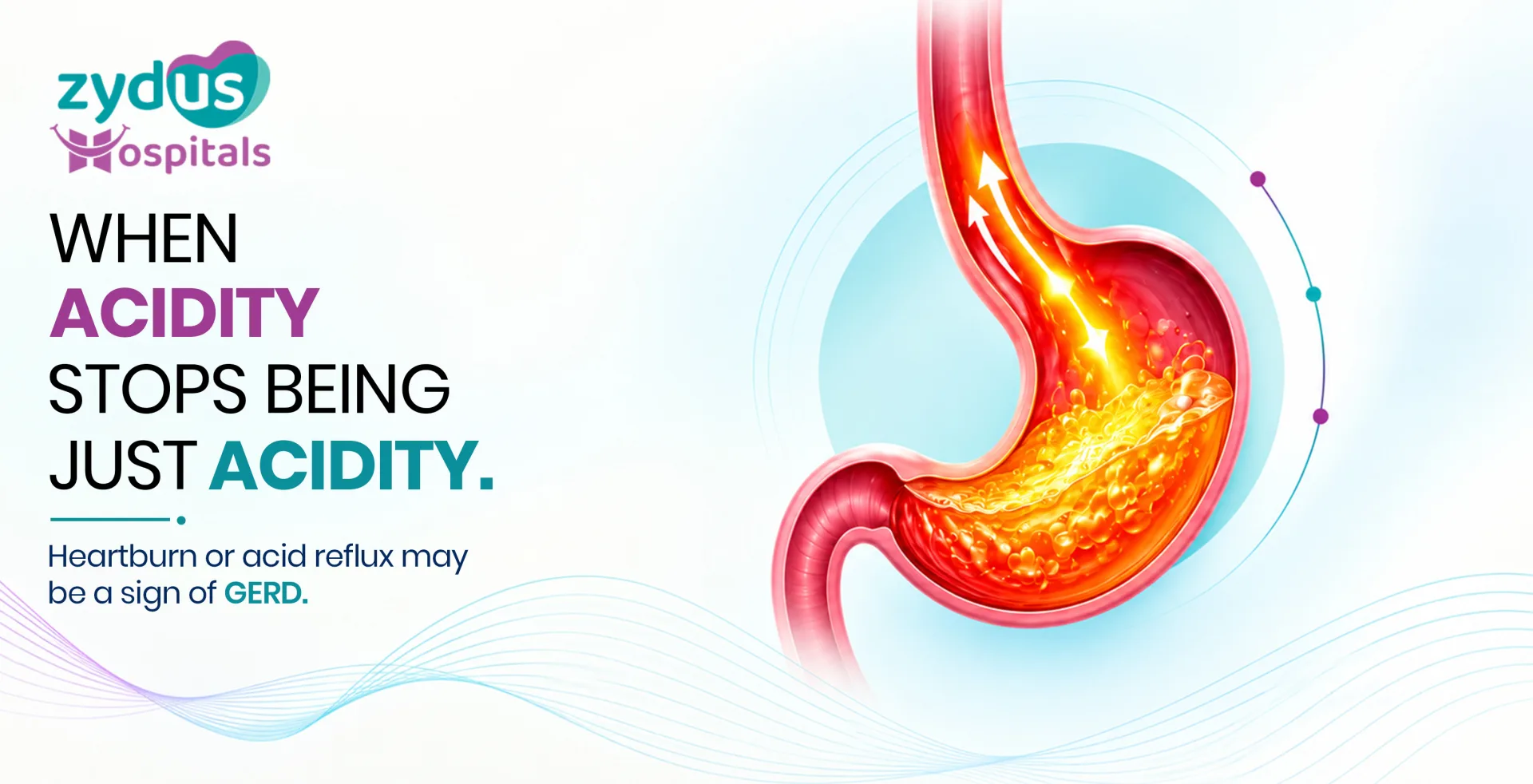
GERD Symptoms: When Repeated Acidity Needs Medical Attention
A patient guide to recurrent heartburn, regurgitation and acid reflux
Reviewed and verified by the medical team at Zydus Hospitals.
Many people use the word “acidity” for burning in the chest, sour fluid in the mouth, or upper-abdominal discomfort. One episode after a large or late meal is common. Gastroesophageal reflux disease (GERD) is considered when reflux repeatedly causes troublesome symptoms, affects sleep or daily life, or leads to complications. Frequency can be a useful warning sign, but no single “twice-a-week” rule diagnoses GERD by itself.
Key message: Recurring or troublesome reflux deserves evaluation. New or severe chest pain must never be assumed to be acidity.
What is GERD?
The oesophagus carries food from the mouth to the stomach. At its lower end, a muscle barrier and the diaphragm help limit backward flow. When that barrier is weak or relaxes at the wrong time, stomach contents can move upward. This is reflux.
GERD is a condition in which reflux causes recurrent, troublesome symptoms or complications. Heartburn and regurgitation are the most typical symptoms, but not every episode of burning or gas is GERD.
Common GERD symptoms
- A burning feeling behind the breastbone, often after meals or when lying down
- Sour or bitter fluid, or food, coming back into the throat or mouth
- Symptoms that disturb sleep or worsen after a late meal
- Chest discomfort that has already been assessed and attributed to reflux
- Difficulty swallowing when inflammation or narrowing is present
Belching, bloating and upper-abdominal discomfort can occur alongside reflux, but they are not specific to GERD and may point to dyspepsia or another digestive problem.
GERD, occasional reflux and dyspepsia are not identical
| Pattern | Description | What to do |
|---|---|---|
| Occasional reflux | Infrequent heartburn or regurgitation after a particular meal, without ongoing impact. | Observe triggers and use short-term self-care appropriately. Seek advice if the pattern becomes frequent or troublesome. |
| GERD | Recurrent or troublesome heartburn/regurgitation, night symptoms, impaired quality of life or reflux-related complications. | Medical review may be needed; diagnosis and treatment are based on symptoms, alarm features and response to care. |
| Dyspepsia | Pain, burning or discomfort centred in the upper abdomen, early fullness, bloating or nausea. | May overlap with reflux but can have different causes and should not automatically be labelled GERD. |
Can GERD cause cough, hoarseness or throat symptoms?
Reflux can be associated with chronic cough, throat irritation, a sensation of a lump in the throat or hoarseness. However, these symptoms have many possible causes and should not be attributed to GERD from one symptom alone. The link is more convincing when typical heartburn or regurgitation is also present, and a clinician may need to evaluate other causes first.
Why GERD happens
GERD usually develops through a combination of factors rather than one “bad” food. Factors that can increase reflux include:
- Being overweight or having increased abdominal pressure
- Pregnancy
- A hiatus hernia in some people
- Large meals or lying down soon after eating
- Smoking and, for some people alcohol
- Medicines that affect the lower oesophageal barrier or irritate the oesophagus
- Personal food or drink triggers
Spicy food, coffee, tomatoes, chocolate or citrus may worsen symptoms for some people, but universal restriction is rarely useful. The better approach is to identify repeatable personal triggers without removing foods unnecessarily.
Evidence-based changes that may reduce reflux
- Eat smaller portions if large meals repeatedly trigger symptoms.
- Avoid eating within about 2–3 hours of lying down or going to bed.
- If overweight, discuss gradual weight reduction; it can improve reflux for many people.
- For night-time reflux, raise the head end of the bed or use a supportive wedge.
- Stop smoking and limit any food or drink that reliably worsens your own symptoms.
- Review medicines with a clinician rather than stopping prescribed treatment yourself.
Lifestyle measures are part of treatment, but persistent symptoms should not be managed indefinitely with diet changes and over-the-counter products alone.
When should you see a doctor?
Arrange a medical review when heartburn or regurgitation is recurring, affecting sleep, requiring frequent over-the-counter medication or not improving with sensible changes. Seek earlier assessment for:
- Food sticking or progressive difficulty swallowing
- Pain when swallowing
- Vomiting blood, black stool or signs of gastrointestinal bleeding
- Persistent vomiting
- Unexplained weight loss or loss of appetite
- Anaemia or unusual tiredness identified by a clinician
- Symptoms beginning later in life or changing significantly
Chest-pain safety warning
New, severe or persistent chest pain — especially with breathlessness, sweating, dizziness, nausea or pain spreading to the arm, jaw or back — requires urgent medical assessment. Do not self-diagnose it as acidity.
How GERD is diagnosed
A doctor will first assess the symptom pattern, timing, meal-consumption or medicines already tried, and any alarm features. Typical symptoms without alarm signs can often be managed initially without extensive testing.
Upper GI endoscopy may be recommended when swallowing is difficult, bleeding or weight loss is present, symptoms persist despite appropriate treatment, or another condition needs to be excluded. If the diagnosis is uncertain, ambulatory reflux monitoring can measure reflux over time. Other tests, including oesophageal manometry, are used for specific questions or before certain procedures.
How GERD is treated
Treatment is matched to symptom severity, frequency, test results and complications. It may include lifestyle measures, short-term symptom-relief medicines, and prescribed acid-suppressing treatment. Proton pump inhibitors are commonly used when clinically appropriate because they are effective for healing reflux-related oesophagitis and controlling typical symptoms.
Persistent symptoms do not always mean “more acid”. The clinician may need to check timing and adherence, reconsider the diagnosis, look for another oesophageal or digestive disorder, or arrange objective testing.
Endoscopic or surgical anti-reflux procedures may be considered for carefully selected patients with objectively confirmed GERD, particularly when regurgitation persists, a significant hiatus hernia is present or long-term management needs are complex.
Can GERD damage the oesophagus?
Ongoing reflux can cause oesophagitis and, in some people, narrowing or Barrett’s oesophagus. Most people with reflux do not develop these complications, but recurrent symptoms and alarm signs should not be ignored. The aim of treatment is both symptom control and protection of the oesophagus when injury is present.
GERD care at Zydus Hospitals
The Gastroenterology team at Zydus Hospitals can review recurrent heartburn, regurgitation, swallowing difficulty, and related digestive symptoms. When clinically indicated, evaluation may include endoscopy or other tests to clarify the diagnosis and guide treatment.
Zydus Hospitals, Ahmedabad has a dedicated endoscopy unit equipped with two EUS systems (radial and linear probes) and a single-balloon enteroscopy system.
Recurring acidity should not become a daily routine. Find a Zydus doctor and request an appointment.
Common questions about GERD
Does spicy food cause GERD?
Spicy food may trigger symptoms in some people, but GERD is not caused by one food. Reflux depends on the anti-reflux barrier, meal pattern, body weight, anatomy, and individual triggers.
Can GERD occur without heartburn?
Yes. Some people mainly report regurgitation or night symptoms. Throat or cough symptoms alone are less specific and need careful assessment for other causes.
Do I need an endoscopy for acidity?
Not everyone does. Endoscopy is more likely to be advised for alarm symptoms, persistent or treatment-resistant symptoms, or when another condition needs to be excluded.
Can GERD be managed?
Yes. Many people improve with a tailored combination of lifestyle changes and medical treatment. Persistent symptoms need reassessment rather than repeated self-medication.
Medical disclaimer
This content is intended for general health awareness and education. It does not replace a clinical examination, diagnosis or individualised medical advice. Seek urgent medical care for emergency symptoms and consult a qualified healthcare professional for concerns specific to you.