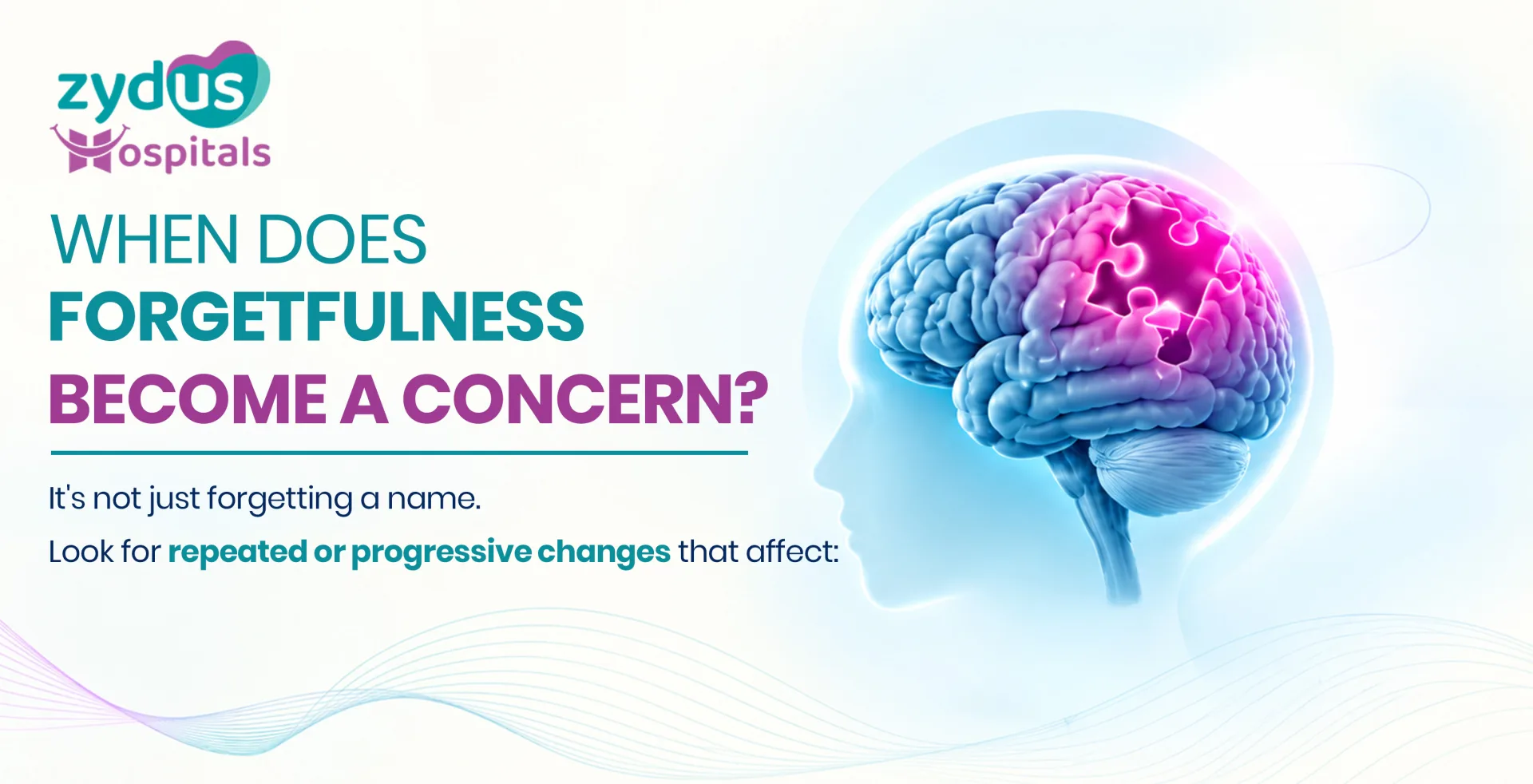
Dementia Symptoms: When Forgetfulness Is More Than Normal Ageing
A practical guide for families noticing changes in memory, thinking, or daily function
Reviewed and verified by the medical team at Zydus Hospitals.
Occasional forgetfulness happens to everyone and may become more noticeable with age. The concern is not one missed name or one misplaced item. It is a new, persistent pattern that affects conversations, judgement, familiar tasks or a person’s ability to manage everyday life independently. Dementia is an umbrella term for conditions that cause this level of cognitive decline; it is not an inevitable part of getting older.
Key message: One isolated lapse does not diagnose dementia. Repeated or progressive changes that affect daily function deserve a medical evaluation.
What dementia means
Dementia is not one disease. It describes a decline in cognitive abilities caused by diseases or injuries that affect the brain. Alzheimer’s disease is the most common cause, while vascular dementia, dementia with Lewy bodies, frontotemporal dementia and mixed forms are also recognised.
Memory problems are common, but they are not the only possible sign. Depending on the underlying condition, a person may first develop changes in language, judgement, visual-spatial skills, behaviour, movement or problem-solving.
Normal ageing, mild cognitive impairment and dementia
| Pattern | What it can look like | Effect on independence |
|---|---|---|
| Normal ageing | Occasionally forgetting a name or usual things but remembering later; misplacing an item and retracing later is common aging. | Independent daily life remains intact. |
| Mild cognitive impairment (MCI) | Changes are greater than expected for age and are noticeable to the person or family; tasks may take longer or need reminders. | Most independence is preserved, although complex tasks may require extra effort. |
| Dementia | Progressive difficulty with memory or other cognitive abilities, such as managing money, medicines, routes, communication, or the judgement. | The changes interfere with independent everyday functioning. |
These examples are guides, not a self-diagnosis. Education level, language, mood, hearing, vision, medical illness, and medicines can all affect how someone performs during an assessment.
Early dementia symptoms; families may notice
- Repeating the same question or story without remembering the earlier conversation
- Forgetting recent events more often while older memories remain clearer
- Getting lost on familiar routes or becoming confused about time or place
- Struggling with bills, medicines, cooking steps or other familiar tasks
- Difficulty finding words, following a conversation or understanding instructions
- Changes in judgement, such as unsafe decisions or unusual spending
- Difficulty recognising familiar people, objects or surroundings
- Withdrawal, apathy, anxiety, irritability, suspicion or a noticeable personality change
The important feature is change from the person’s usual ability. Some people recognise the change themselves. Others may have limited awareness, which is why observations from a family member or close caregiver can be clinically useful.
Could something else be affecting memory?
Memory and concentration can be affected by depression, anxiety, poor sleep, sleep apnoea, thyroid disease, vitamin B12 deficiency, hearing or vision loss, medication side effects, alcohol or substance use, infections and other medical problems. Acute confusion can also occur during illness, dehydration or after a medicine change.
Finding and treating a contributor may improve symptoms, but it does not automatically explain every cognitive change. A clinician needs to consider the full pattern rather than assuming either “it is only age” or “it must be dementia”.
Why early evaluation matters
An evaluation can identify treatable contributors, establish a baseline, clarify whether the pattern is more consistent with normal ageing, MCI or dementia, and guide the next investigation. When a progressive dementia is diagnosed, earlier discussion also gives the person and family more time to plan medicines, safety, legal and financial decisions, driving, future care and caregiver support.
Early assessment does not mean jumping to the worst conclusion. It replaces guesswork with a structured clinical review.
How dementia is evaluated
There is no single test that answers every question. A dementia assessment may include:
- A detailed history of when the changes began, how they have progressed and how they affect daily life
- Information from a family member or caregiver, with the patient’s consent where possible
- Review of medicines, alcohol or substance use, sleep, mood, hearing, vision and other illnesses
- Assessment of memory, attention, language, planning and other cognitive functions
- Physical and neurological examination
- Targeted blood tests and brain imaging when clinically indicated
- More detailed neuropsychological or specialist assessment in selected cases
The aim is to identify the cognitive syndrome, understand its likely cause and stage, and rule out other explanations that need treatment.
When sudden confusion is an emergency
Seek urgent medical care when confusion develops suddenly over minutes, hours or a few days, especially with weakness, facial drooping, speech difficulty, severe headache, fever, reduced alertness, a fall or a recent medicine change. Do not wait for a routine memory appointment when symptoms are acute.
What happens after a diagnosis?
The plan depends on the cause, stage, symptoms, other health conditions and the person’s priorities. It may include medicines for selected conditions, treatment of vascular risk factors, physical activity, cognitive and functional support, management of sleep or mood, home-safety planning and guidance for caregivers. Follow-up matters because needs can change over time.
Most progressive dementias do not currently have a cure, but appropriate treatment and support can improve quality of life, manage symptoms and help families plan care more safely.
Practical ways families can help
- Use calm, simple communication and allow extra time for an answer.
- Keep daily routines predictable and reduce unnecessary choices when the person is overwhelmed.
- Use visible calendars, labelled storage, pill organisers or supervised medicine systems where appropriate.
- Review fall, driving, cooking and financial safety without taking away independence unnecessarily.
- Share caregiving responsibilities and ask for professional support before exhaustion becomes a crisis.
Dementia assessment at Zydus Hospitals
The Neurology team at Zydus Hospitals can assess changes in memory, thinking, behaviour and daily function, and recommend appropriate investigations or referrals based on the individual’s clinical needs. The goal is to understand what has changed, what may be contributing and what support is required next.
Concerned about a persistent change in memory or behaviour? Find a Zydus doctor and request an appointment.
Common questions about dementia symptoms
Does every memory lapse mean dementia?
No. Occasional forgetfulness is common. The concern is a repeated or progressive change that is greater than expected for the person and interferes with daily function.
Is dementia a normal part of ageing?
No. Dementia becomes more common with age, but it is caused by diseases or injuries that affect the brain and is not inevitable.
Can dementia symptoms improve?
Some contributing problems, such as medicine effects, depression, sleep disorders or nutritional and hormonal abnormalities, may be treatable. Progressive dementias are usually managed rather than cured, and the response depends on the cause.
Which specialist should assess memory changes?
A physician or neurologist can begin the assessment. Sudden confusion or sudden neurological symptoms require emergency care rather than a routine clinic visit.
Medical disclaimer
This content is intended for general health awareness and education. It does not replace a clinical examination, diagnosis or individualised medical advice. Seek urgent medical care for emergency symptoms and consult a qualified healthcare professional for concerns specific to you.