Dr. Dinesh Saini - Neurologist & Movement Disorder Specialist
-
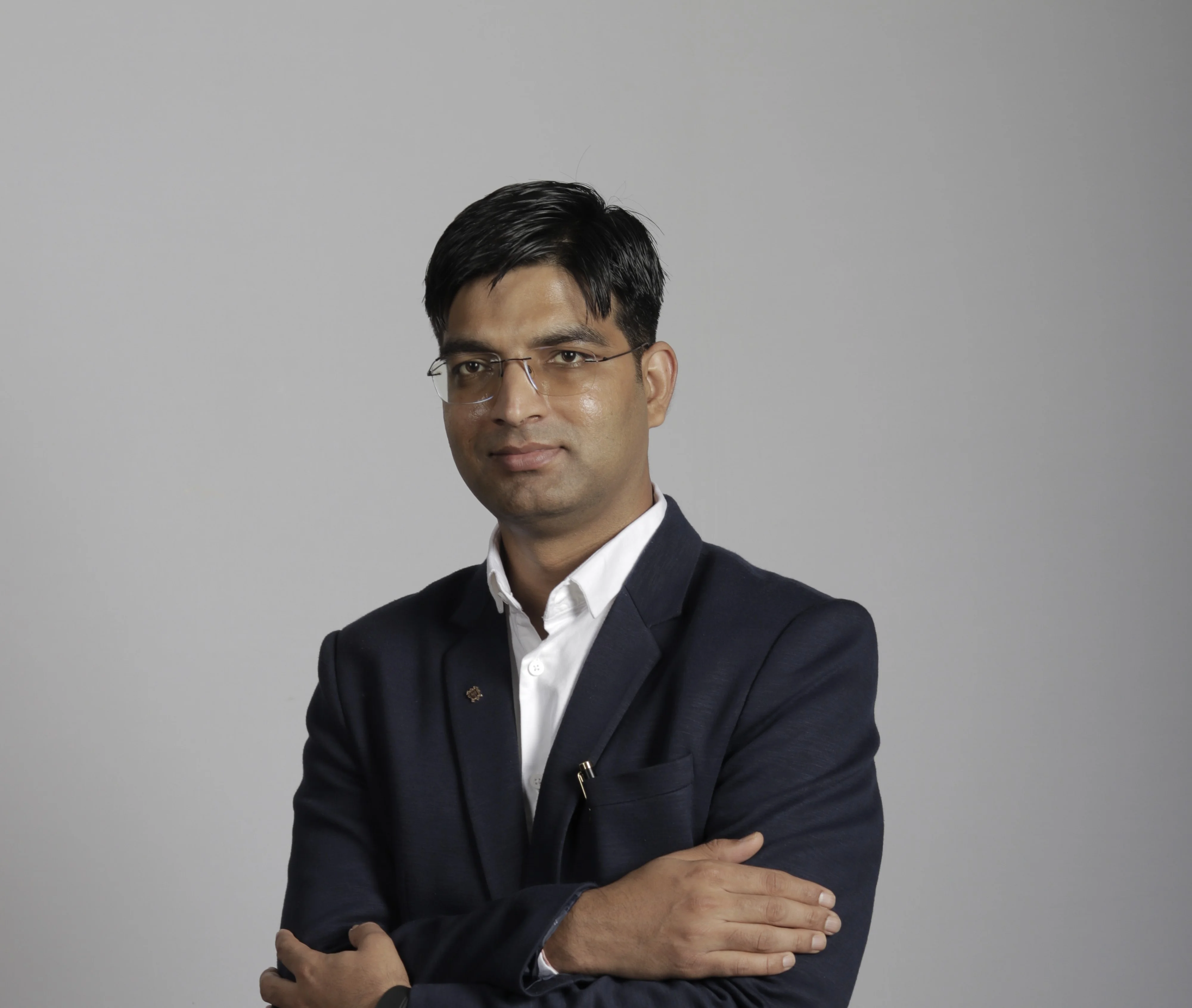
Dr. Dinesh Saini
Neurologist & Movement Disorder Specialist
MD Medicine, DM Neurology, PDF Movement Disorder, PG Cardiology, PG Geriatric Medicine
Professional Bio:
- Dr. Dinesh Saini is Young & Dynamic Neurologist. He has worked in the field of neurology for almost a decade. With thousands of patients treated for a wide range of neurological conditions, he is a Neurophysicians of the new generation. His expertise in providing consultative and therapeutic procedures includes Headache and Migraine, Trigeminal Neuralgia, Bell’s palsy, GB syndrome and neuropathy, Muscle disorder, Myasthenia gravis, Seizure and epilepsy, Tremor and dystonia, Parkinson disease, Stroke and brain haemorrhage, Dementia, meningitis and encephalitis. He has done DM neurology from IPGMER Kolkata which is an Apex neurology teaching Centre of North East India. He is trained in the diagnosis and the management of Movement Disorders and DBS surgeries from MARMARA University Hospital, Istanbul. During the teaching tenure he was trained at stroke unit, headache clinic, epilepsy clinic, movement disorder clinic, cognitive clinic. He is well-trained in electrophysiological procedures like EEG, NCS, VEP, SEP, BARE etc. He is also an expert in BOTOX procedures in various neurological procedures. He also has keen interest in neurocritical care and epilepsy. He has done more than 200 I.V. thrombolysis procedures and work as team member of many stroke intervention procedures. His research is published in several national and international journals and a Primary Investigator and Co-Primary Investigator in various trials. He is member of organizing committee of Neurology Updates at Ahmedabad.
Academic Details:
- MBBS from Dr. SN Medical College in 2009.
- MD in Internal Medicine from Dr. SN Medical College in 2013.
- DM Neurology from IPGMER Kolkata which is an Apex neurology teaching Centre of North East India.
- PDF Movement Disorder from MARMARA University, Istanbul (2025).
- INPCC Neuropalliative Care from Manipal University.
Let’s understand Movement Disorder and the role of a trained Neurologist- Dr. Dinesh Saini, (Movement Disorder Expert & Neurologist)
Many aspects of life go unnoticed until they begin to fail. Simple abilities like walking, maintaining balance, or moving our limbs are often taken for granted—until they’re disrupted. A slight tremor, stiffness in a limb, or loss of balance may seem minor, but each of these signals is closely linked to the health of our brain.
While a primary care doctor or general neurologist is an essential first step, there is a highly specialized expert devoted exclusively to these challenges: The Movement Disorder Neurologist.
A Movement Disorder Neurologist is a medical doctor who, after completing a neurology residency, undergoes an additional fellowship training focused exclusively on conditions that affect the speed, fluency, and quality of movement.
They are "super-specialists" focused on the body’s motor system. While a general neurologist treats everything from migraines to strokes, a movement specialist spends most of his time, diagnosing and managing complex motor conditions.
Conditions They Treat
• Parkinson’s Disease & Parkinsonism: Managing tremors, slowness (bradykinesia), and stiffness.
• Essential Tremor: Addressing involuntary shaking, often in the hands or head.
• Dystonia: Treating involuntary muscle contractions that cause repetitive movements or abnormal postures.
• Huntington’s Disease: Managing the involuntary "dance-like" movements (chorea).
• Tourette Syndrome & Tics: Helping with sudden, repetitive movements or sounds.
• Ataxia: Addressing issues with coordination and balance.
Why See a Specialist?
1. Precision in Diagnosis
Many movement disorders can appear similar at first glance. A trained specialist, however, can identify subtle distinctions—such as the unique rhythm of a tremor or the pattern of arm swing while walking—that help differentiate Parkinson’s disease from a benign tremor or rarer atypical conditions.
2. Expert Medication Management
The medications used for these conditions (like Levodopa or Dopamine agonists) require fine-tuning. A specialist knows how to balance dosages to maximize "on-time" (when the medicine works) while minimizing side effects like dyskinesia (fidgety movements).
3. Advanced Interventions
They serve as the gateway to advanced treatments that extend far beyond medication alone.
• Botulinum Toxin (Botox) Injections: Used for localized muscle spasms and dystonia.
• Deep Brain Stimulation (DBS): They work with neurosurgeons to program "brain pacemakers" that can dramatically reduce symptoms.
• Clinical Trials: They often provide access to new therapies still in the research phase.
4. Holistic Care Team
Movement disorders often involve "non-motor" symptoms like anxiety, sleep issues, or speech changes. These specialists lead a multidisciplinary team, coordinating with physical therapists, speech pathologists, and neuropsychologists to treat them fully.
When Should You Seek Help?
It’s a common misconception that you should wait until symptoms become “severe” before seeing a specialist. In reality, early intervention plays a crucial role in preserving quality of life and slowing functional decline.
If one faces the following, consulting a specialist is advisable:
• Experiencing a tremor that interferes with your daily tasks (writing, eating).
• Heaviness or slowness in your limbs without any injury.
• Unsteady Balance
• On-going neurological treatment is no longer providing the same relief.
Publications:
- Mucormycosis and COVID-19: An epidemic within a pandemic in India. Lav Selarka, Suktara Sharma, Dinesh Saini .Mycoses.2021 Oct;64(10):1253-1260. doi: 10.1111/myc.13353. Epub 2021 Jul 24.
- Case Report of an interesting case of hemiparesis with resistant epilepsy- Dyke, Davidoff, and Masson syndrome. Dinesh Saini , Anurag Satpati,, Alok Pandit, Gautam Ganguly. Ind journal of neurosciences. Year- 2017 | Volume: 3 | Issue 1. page no 38 -40.
- Retrospective Analysis of Diabetic admissions: Moving Forward by Looking Back G Mathur, S Mathur, PPrakash, HAgarwal, S Mathur, A Mathur, M Kackar, Dinesh Saini. Natl J Community Med. 2013; 4(4): 594-598.
- Effect of acute illness on cognitive functions in Elderly: K Sumeet, Saini Dinesh, Arvind Mathur, Arvind Jain, Harish Agarwal. Journal of the indian academy of geriatrics Dec 2012 vol.8.
- Mucormycosis- A Dreaded Complication Of Covid-19. L Selarka, MS,A Sharma, DM, G Rathod, MD, Dinesh Saini, DM, S Patel, MD, and Vijay K Sharma, MD QJM. 2021 Jun 14: hcab166.
- Neuromyelitis Optica Spectrum Disorder with Tumefactive Demyelination mimicking Multiple Sclerosis: A Rare Case:U Roy, Dinesh Saini, K Pan, APandit, G Ganguly, and A Panwar. Front Neurol. 2016; 7: 73.
- A Comparative Study of the Behavioral Profile of the Behavioral Variant of Frontotemporal Dementia and Parkinson's Disease Dementia. Dinesh Saini, A Mukherjee, A Roy, A Biswas Dement Geriatr Extra.2020 Dec 15;10(3):182- 194. doi: 10.1159/000512042. eCollection 2020 Sep-Dec. vol.8.
- Wilson disease presentation with a funny gait. Dr Dinesh Saini, Dr Ajit Sowani, Dr Arvind Sharma. Annals of movement disorders vol.7 supplement Feb 24.
- Focal stenotic cerebral Arteriopathy of in young patient- Is it atherosclerotic, infective or else: Krunal Padhiyar, Dinesh Saini, Sudhir Shah. Puzzling cases in stroke 2023 vol 2.